
Developing Human Skills In The Age of AI: Imagination
I went to a strength and mobility class this morning and as we started into our weighted squats, the instructor walked us through the correct form of the movement. Instead of a step-by-step explanation of how to position our feet, he guided us to imagine that, “your feet are on top of two jam jars, and you are trying to open the jars with your feet.”
I immediately pictured my bare feet on top of the Belle Mammon jars, the ones with the red and white checkered lids. I pictured my toes gripping the lids, and then…
Without conscious effort, my knees and hips turned out and found strengthening tension. The proper form of the weighted squat.
And it took everything in me to not drop the weight and jump up and down shrieking, “Eureka!” because in that moment something became very clear to me:
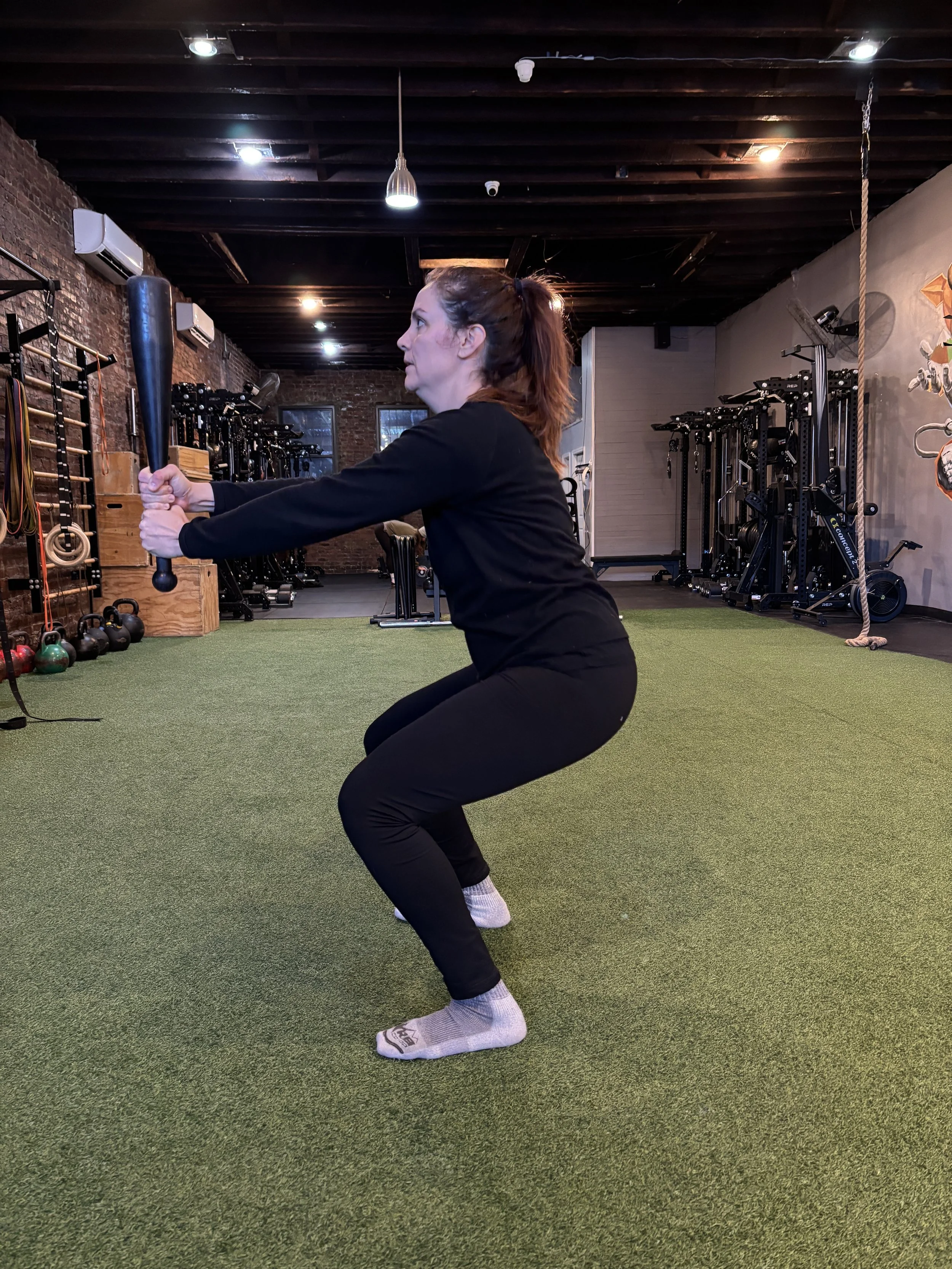
Imagination creates deep, personal, meaningful change.
Had my instructor simply called out the distance and angle for my feet, I would be blindly following an external set of instructions. But when he instead asked me to activate my own imagination in order to feel the proper form, it really made the adjustment highly personal and it was an instinctual adjustment that came from me- which will allow me to more confidently recreate that movement on my own gym time without relying on the instructor checklisting the instructions.
The other thing imagining the jam jars did for me was it added playfulness to the hard work of working through yet another rep of weighted squats. Imagining my feet on those checkered lids made the hard work lighter, easier to push through.
Imaginative thinking isn’t an “extra”. It’s a powerful leadership tool that helps people internalize learning, connect more deeply, and stay engaged through hard work.
When we invite imagination into our conversations with staff, students, and patrons, we move beyond compliance and into ownership, curiosity, and confidence. The good news? You don’t need a complete overhaul to begin. Small shifts in language and practice can create meaningful change. Here’s a few ideas
Try this right away in your environment:
Swap directions for imagery: Instead of only giving step-by-step instructions, offer a simple metaphor or image that helps people feel the concept (e.g., “Hold your idea like a fragile object” or "Facilitate conversations in the room like a spider weaving a web”).
Invite playful participation: Ask learners or patrons to contribute their own images or metaphors for a task, process, or challenge. This activates imagination and makes the work personal and memorable.
If you’re ready to move beyond surface level engagement and intentionally build a culture where imagination fuels learning, connection, and growth, this is the work I support leaders in doing. Together, we can design experiences and environments where imagination becomes the transformative engine driving meaningful change.